Wednesday, 8 January 2014

The Memphis Group

The Memphis group was a group of Italian designers and architects who created a series of highly influential products in the 1980's. it was founded in Milan and their aim was to refresh, strengthen the radical design and to design a new creative approach to design. The leader of the group was Ettore Sottsass and the name Memphis came from the song Memphis blues which belonged to Bob Dylan. While listening to music with his ‘group’ at his house planning about their new group Ettore came up with the idea to name it Memphis. The Memphis groups designers were Ettore Sottsass, Michele De Lucchi, Maro Zanini, Mateo Thun, Nathalie de Pasquier and George Sowden. 


They made beautiful and bizarre designs, with bright vibrant colours, textures, use of different materials, well several materials in one most often and the intentionally mocked the presentations of good design.

Martine Bedine, Super Lamp for Memphis


They convinced Abet to make new laminates printed with extraordinary vibrant patterns inspired by pop art, op art and electronic imagery.


Ernesto Gismondi became the head of the group later on and on the 18th of September 1981 the group showed their work for the first time. All designs were designed by an international group of architects and designers inclugin Hans Hollein, Shiro Kuramata, Peter Shire, Javier Mariscal, Massanori Umeda and Michael Graves. The group always agreed, accepted the Memphis was a trend/phase tied to the briefness of fashion and in 1988 when its popularity started to decrease Sottsass separated it. Although Memphis was a short lived phase its youthful vitality and humor was central to the internationalization of post modernism.

Through my research I've found a fashion show Dior made with inspiration from the Memphis Group's designs.


mirror 80. 2011. Memphis Design Meets Haute Couture: Christian Dior’s Fall-Winter Collection. [ONLINE] Available at: http://mirror80.com/2011/07/memphis-design-meets-haute-couture-christian-diors-fall-and-winter-collection/. [Accessed 08 February 14].
juilies juice. 2011. memphis dior. [ONLINE] Available at: http://juliesjuice.wordpress.com/category/memphis-design/. [Accessed 08 February 14].
Thames & Hudson, T&H, 2004. design since 1900. 2nd ed. singapore: C.C Graphics.


Monday, 6 January 2014

Post Modern Design

Pop modern design is possibly one of the most scandalous and notorious movements in design. Architects and designers argued that modern architecture was basically meaningless. Post modernists were bored with all the inspiration from science and universal truths from the modernists. Modernists believed that less was more but for the post modernists less was a bore. Post modernists believed that we needed as many references as possible to find out individual subjective conclusions. They believed in collage, anarchy, repetition these were extremely interesting. The post modernist designers wanted to challenge the audiences and force them to ask questions. Buildings now became fancier and more interesting also nice to look at such as the buildings in Vegas which have different styles, cultures and playful collages.


Critics disapproved unnecessary ornamentation and obsessive tendency to recycle the past to make something new and regularly plain silliness. Mass media helped post modernism grow, the world related together like never before. Post modernism was liberating, designers did what they wanted and what felt right for them and didn’t go for ‘rules’ like other movements had. Their designs were often funny, sometimes confrontational and occasionally absurd. They had bright colour, theatricality and exaggeration: everything was a style statement. Whether surfaces were glossy, faked or purposely distressed, they showed the desire to combine rebellious statements with money making appeal. Designs didn't have much functionality other than decoration.

Roland Barthes believed that if objects and buildings were full of symbolism viewers and consumers will relate to them more. Music and magazines were the most important delivery system for this new period.
Post modernism divided the line between day wear and evening wear, formal and casual fusing them in a single style it even merged fine arts and mass culture too. Architect Michael Graves and others presented a new artistic, appealing visual in architecture by the mid-1970s.


Michaels building is known for its small square windows, exaggerated historical motifs, playful, different materials, tacky loud colors, and, of course it’s the larger-than-life statue over the building’s front door.
It was like you were grabbing a functional object and just adding decorations on it to make it look different, ‘prettier’ and nice, link in the pictures below.

Michael Graves Tea and Coffee Piazzo for Alessi


Proust, Alessandro Mendini


Anna g corkscrew, Alessi and Alessandro Mendini


a/n blog. 2014. MICHAEL GRAVES’ PORTLAND BUILDING COULD BE IN JEOPARDY. [ONLINE] Available at: http://blog.archpaper.com/wordpress/archives/77982#more-77982. [Accessed 06 January 14].
v&a. 2012. postmodernism. [ONLINE] Available at: http://www.vam.ac.uk/content/articles/p/postmodernism/. [Accessed 06 January 14].
youtube. (2013). Postmodernism: Design in a Nutshell (6/6). [Online Video]. 08 May. Available from: http://www.youtube.com/watch?v=lKomOqYU4Mw. [Accessed: 06 February 2014].


Saturday, 4 January 2014

High Tech

High tech first began in architecture in the mid-1960s. Its designs were inspired by geometric formalism of classical modernism and the radical design requests of Buckminster Fuller. It was founded by architects; Norman Foster, Richard Rogers and Michael Hopkins who combined simple industrial elements in their buildings, the high tech design ended up into the majority of interior design during the 70s. Things such as trolleys, rubber flooring, clip-on lighting, galvanized zinc shelving and scaffolding were used in high tech interiors which frequently had primary colour schemes to praise the de stijl.


Pompidou Centre, Renzo Piano and Richard Rogers 1977

Glass walls and steel structures were extremely popular. Open spaces were dominating in the interiors, as well as drive to keep the optimal order and functionality. Furniture had simple and geometrical shapes.


Fiell, C & P F, 1999. design of the 20th century. 2nd ed. china: ISBN.
Thames & Hudson, T&H, 2004. design since 1900. 2nd ed. singapore: C.C Graphics.
richardrogers. 2014. Centre Pompidou. [ONLINE] Available at: http://www.richardrogers.co.uk/work/buildings/centre_pompidou/completed. [Accessed 04 January 14].


Thursday, 2 January 2014

Space Age

The space age began during pop design. It all started when President JF Kennedy announced before a special joint session of Congress the dramatic and ambitious goal of sending an American safely to the Moon before the end of the decade. There was great competition between Russia and America to see who’d make it to the moon first. During my research and reading about the competition there was between the Russians and Americans I remembered that in the movie Rocky 4 they showed how big and important it was for them to compete with the Russians the Americans – Apollo Creed, made a huge spectacular entrance which amazed the Russian boxer Drago. When the second fight was held in Russia they also did another important entrance but not as spectacular as the Americans it was strict and ‘war’ like but when the fight ended and Rocky won he did a small speech telling everyone that if he could change then everyone could. This meant that all this competition was for nothing and because of the cold war too. I was surprised how a boxing movie involved the competition there was between Americans and Russians.


Speech clip- http://www.youtube.com/watch?v=QRBak_2X3Do

Anyhow back to Space age this inspired designer’s especially fashion designers. Clothing was now made from pvc and silver and white fabric. Fashion looked futuristic and something which they’ve never had before it gave women a completely new look/style.

Andre’ Courreges designed for vogue and which included high skirts and dresses with geometric patterns and cut-outs, space-like helmets, and mid-shin and PVC boots, inspired by NASA he used colours like silver and white. His first thrust was to introduce tunic pantsuits at a time when women weren’t admitted into many restaurants in trousers. He also designed alien like sunglasses which looked very futuristic and unique, his collection was called Moon Girl.


Futuristic forms were featured in everything from television sets, textiles, lighting and kettles. Edward Craven Walker designed the first lava lamps during the space age and we still have them produced to this day. It’s interesting how things which were designed YEARS ago are still as interesting and ‘wanted’ as much as they were during that period of time.


Fashion and pop stars still do inspire themselves from space such as Lady Gaga. She brought back this weird and futuristic style back.


spyvibe. 2009. mods to moongirls. [ONLINE] Available at: http://spyvibe.blogspot.com/2009/03/mods-and-moongirls.html. [Accessed 02 January 14].
vouguepedia. 2010. space age. [ONLINE] Available at: http://www.vogue.com/voguepedia/Space_Age. [Accessed 02 January 14].


Sunday, 29 December 2013

Anti design/Radical design

Anti design/Radical design was a movement which began in the 1960’s, it was led by Pop design. Its goals was to break the values of ‘good design’. Radical design praised individual creativity and expression and was also popularized by the Italians in the 60s and 70s. Designers thought that modernism was no longer avant-garde nor a cultural driving force since the industrialists changed it into a consumerist marketing venture. Their designs were also surrealistic and the pioneers of surrealist desgins were:

Carlo Mollino, Ardea armchair:


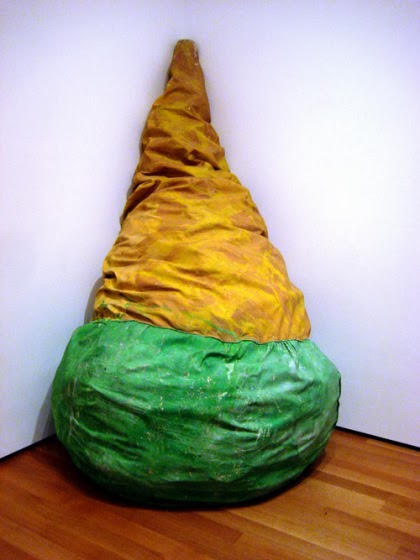
Claes Oldenburg, soft sculptures soft toilet and giant blt:


Gatti, Paolini and Teodoro, Sacco:


The first promoters of radical design were the design and architectural groups; Super Studio, Archizoom, UFO, Gruppo Sturm, Gruppo 9999, Cavart and Libidarch. They attacked ideas of what was ‘good taste’ and rebelled against happening and installations that questioned the strength of rationalism, advanced technology and consumerism. They turned everyday goods into an artistic level. An important spokesman for anti design was Ettore Sottsass. They’re designs were meant to be functional but not necessarily beautiful, their design were as quick to throw away and be replaced by something new and more functional. Anti-Designers wanted people to think about the objects they were buying, even if they ultimately threw those objects away. Designers used rich variety of colours, decorative elements, materials and created objects which were both useful but stood out for their bizarrely.

Piero Gilardi, Sassi-“the rocks.” Chairs made of polyurethane which were manufactured by Gufram. The form disguises the function and they’re imitating a natural object. A rock is hard and durable which makes these qualities totally at odds with the function of a chair, which is supposed to be soft and comfortable. So here we have Piero is defying Modernist functionalism.


The Joe Sofa was designed by Paolo Lomazzi and named after Joe Colombo, a legendary Italian designer. Its made of polyurethane, covered with leather and it was manufactured by Poltronova. Like postmodernist design, it’s an overblown symbol designed to communicate on a very basic level. It suggests that forms don’t have to be invented, they can just be recycled.


the art history archive. 2011. anti design. [ONLINE] Available at: http://www.arthistoryarchive.com/arthistory/antidesign/. [Accessed 29 December 13].
Fiell, C & P F, 1999. design of the 20th century. 2nd ed. china: ISBN.
Thames & Hudson, T&H, 2004. design since 1900. 2nd ed. singapore: C.C Graphics.


Friday, 27 December 2013

Pop Design


Pop Design was invented in the 1950's and by the word pop they meant popular design. It grew upon the affluence of the post war society in the 1950s and 60s. It started in the USA but also grew in England. People were bored with buildings and couldn’t be bothered to have more straight boring stuff/objects. The Independent group was formed in London 1952 and its members were; Richard Hamilton - an artist, Eduardo Paolozzi - a sculptor, Reyner Banham - an art critic and architects Peter and Alison Smithson, they were the first to explore and celebrate this movement in America.


In the 1960s ‘low art’ such as advertising, packaging, comics and television were inspiring artists such as Andy Warhol, Roy Litchtenstein and Claes Oldenburg. Pop design also began to show in design objects of everyday use. They came up with the saying “use it today sling it tomorrow”. They didn’t want to follow traditional norms and behavior they wanted something new unique and totally different. Designers mixed different eras with each other in design, it was a youth based design – rock peace and love.

Before pop design in the 1960s functionalism and good design were popular in Germany and Italy which then produced Bel (beautiful) design. Development of artificial materials such as polypropylene gave designers the possibility to experiment with design and colours. This is how plastics became very popular in design and it aimed at the youth market which was cheap, fun but without doubt poor quality.


Some designers were inspired by hippies, pop music, flower power and their own culture such as foods in diners.


Designs which were handmade and good such as Marcel Breuer’s and etc. were all looked at as inhuman, cold and outdated. Colour and ‘ephemerality’ were the new aspects of design. Pop design drew from many sources such as; art nouveau, art deco, futurism, surrealism, Op Art – blocks of colour Bridget Riley, eastern mysticism, kitsch and space age.


‘Less is more’ was no more something they believed in they did the total opposite which then led to Radical design. Designs were popular, transient, expendable, low-cost, mass produced, young, witty, sexy, gimmicky and glamorous. Designers also designed dresses out of paper which was called ‘throwaway fashion’, which truly began in the 20th century in Germany but then the idea was brought back to life in the 60s. In the hopeful, optimistic 60s, paper was the clothing "textile" of the future. At a time more and more goods were becoming "disposable" (plates, cups, cutlery, plastics in packaging, tissues, etc.), disposable clothing seemed like the next big thing.

20s:
 60s:


Till this day we still use things which were invented/designed during the pop design movement we still have Tupperware and it still is something most of us will find in our kitchen cupboards and we also are still inspired by Andy Warhol's work as you can see below.

Warhol's work:


Screenshots I took from a music video which reminded me of his work:


Wine packaging inspired by Warhol: 


Beginning of Tupperware to today's Tupperware, more variety of shapes and designs:

 Beginning:

 Today:


idealog. 2010. the die line. [ONLINE] Available at: http://www.idealog.co.nz/blog/2010/07/website-review-dieline. [Accessed 27 December 13].
v&a. 2012. paper dresses. [ONLINE] Available at: http://www.vam.ac.uk/users/node/6419. [Accessed 27 December 13].
mental_floss. 2009. Disposable Suits and Paper Underpants. [ONLINE] Available at: http://mentalfloss.com/article/21361/disposable-suits-and-paper-underpants. [Accessed 27 December 13].
creative glossary. 2011. pop art. [ONLINE] Available at: http://www.creativeglossary.com/art-stylesmovements/pop-art.html. [Accessed 27 December 13].
Fiell, C & P F, 1999. design of the 20th century. 2nd ed. china: ISBN.
Thames & Hudson, T&H, 2004. design since 1900. 2nd ed. singapore: C.C Graphics.


Thursday, 12 December 2013

Norman Bel Geddes


Norman Bel Geddes worked as a draughtsman in an advertising industry in Detroit and shortly afterwards he became an art director. He wrote plays, became a set designer and also designed lavish, luxurious, rich sets in New York. He was influenced by Frank Lloyd Wright with whom he had worked with too. Geddes then planned on designing architecture and product styling. He later on designed a book which showed his streamlining design and approach. 


This is a design Geddes drew/painted for a theatre set and in the picture below 
you can see how he developed it beautifully


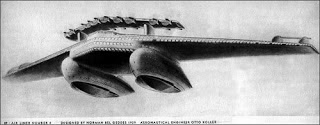
Geddes was one of the popular designers, he has a great impact on American life. during the streamlining movement he designed cars, ships and airlines. 


In the sketches above you can see that he was thinking of something new and which never existed it looked futuristic and streamlined at the same time because of it's smooth curves and tear drop shapes both of them have. He believed in the importance of the tear drop shape, as you can see in most of his designs. 


Though I have to admit that Geddes car design reminded my of a cartoon space ship - futurama. Just to realise the this has been design years ago and a cartoon of this era comes up with something similar.  He also designed metal bedroom furnishings for Simmons. One of his most noticeable kitchen designs was the Oriole stove.


The Oriole Stove is one of his most commonly used and supplied design. In the picture below you'll see furniture Geddes made from metall for Simmons.


In my opinion they didn't look streamlined thought the dresser on the left does have more of a nice curvier shape which makes it more interesting for its age.


Thames & Hudson, T&H, 2004. design since 1900. 2nd ed. singapore: C.C Graphics.